Wednesday, March 25, 2009

EcoSystem uses fly larva to make MAGFUEL

By Erin Voegele


Web exclusive posted March 20, 2009, at 1:38 p.m. CST 

EcoSystem Corp. is working to develop a bioreactor technology that utilizes black soldier fly larva to convert food scrap waste into natural oils, which can be used as a feedstock for biodiesel production and specialty chemical applications. The natural oil that is produced has been trademarked by the company as MAGFUEL. 

The larva would be raised in contained bioconversion facilities which would be located in close proximity to major sources of food scrap waste, said Glen Courtright, EcoSystem's president and chief executive officer. Courtright said the company envisions setting up a series of these facilities that are scaled to match each market's available feedstock output. Potential feedstock suppliers could include large-scale industrial food manufacturers, grocery stores, restaurants and caterers, slaughter houses, and facilities producing agricultural waste. 

The larva housed in the bioconversion facilities would consume food waste, and be processed to extract their naturally produced oil, or MAGFUEL. The company has estimated that the dry weight of the larva consists of approximately 42 percent protein and 35 percent natural oils. When running at full capacity, it's estimated the technology could yield up to 190,000 gallons of crude natural oils per acre of bioreactor surface area each year. In comparison, soybeans yield an average of 40 gallons of oil per acre annually. The company also estimated the technology could be deployed at a cost of less than $100 per square foot.


Courtright said the oil would be extracted from the larva using existing rendering technology, which would produce two main products – lipids and a high protein product suitable for use as an aquaculture feed. In addition, the fly larva would produce castings at the bioconversion facility that can be used to fertilize soil. The technology produces virtually no waste products. 

According to data published by the USDA Economic Research Service in 2007, approximately 27 percent of the 356 billion pounds of edible food available for human consumption in the U.S. was lost during farm, processing, and retail stages of marketing. EcoSystem estimated that 25 percent of the volume of retail, restaurant, and industrial-generated food waste could be converted into black soldier fly larva using this technology. Based upon information the company sourced from U.S. 2010 Census data, up to 100 MMgy of MAGFUEL could be produced and sold to U.S. biodiesel producers using this technology. 

EcoSystem intends to market the trademarked MAGFUEL into the existing biodiesel industry as a blending agent for lower grade biodiesel feedstocks, such as white grease, tallow and yellow grease. According to Courtright, the company is currently working to develop a pilot facility, which is expected to begin operations later this year.

Saturday, September 6, 2008

E.ON plans US$164m biomass plant in Bristol

Plans are in the works to construct a 150MW plant at the port of Bristol as part of E.ON's investment program in a range of power generating technologies.

The company recently came under fire for planning to build Great Britain's first new coal-fired power plant since well over 20 years. It also wants to expand nuclear capacity by adding at least two nuclear power stations. Now, E.ON intends to establish one of the country's largest biomass facilities. The plant would be located on the Royal Portbury Dock in Bristol's port and would be E.ON's third biomass facility in the UK.


Paul Golby, CEO of E.ON UK, opined that it can make a significant contribution towards the British government's renewable energy targets. "Schemes such as this, together with cleaner coal, gas and new nuclear, will help us to keep the UK's lights on, while reducing carbon emissions and ensuring energy is as affordable as possible for our customers," he said.


E.ON's investment program in Britain includes one of the world's largest gas-fired power stations, at the Isle of Grain in Kent, as well as the gas-fired plant at Drakelow in Derbyshire; an offshore wind farm in the Solway Firth and plans for the Humber Gateway wind farm. It is also a partner in the London Array wind farm and has invested in marine energy projects in Cornwall and Pembrokeshire.


According to the company, the proposed Bristol biomass power plant would provide enough electricity for 250,000 homes and CO2 emissions savings of 500,000 tons per annum. It will be fired mostly by wood chips, consuming some 1.2m tonnes of them per year. Residual heat would be supplied to nearby industries. If regulatory approval is obtained, construction could start in 2010 with the plant opening in 2013 and achieving full capacity in 2014.

Tuesday, September 2, 2008

HOW THE U.S. GOVERNMENT COULD MAKE YOU A FORTUNE - BEGINNING SEPTEMBER 15


Step 1: The U.S. Government has decided that Energy Speculators are our new enemy. And on September 15, they're going to declare war on this enemy in a very public way.

This declaration of war - and the actions that follow - will create an enormous profit opportunity for those investors like us who know what to do.

Step 2: Following the CTFC report to Capitol Hill on September 15, Congress will get involved in the energy markets in a BIG way - and that creates an enormous opportunity. In fact, we already know what's going to happen!

Immediately after the September 15 report, Congress will begin establishing tighter controls over the energy trading markets. And this over-regulation could have a significant impact on the energy markets. In fact, the potential exists for a HUGE spike in the price of oil.

Step 3: As it becomes apparent that regulating the speculators is having minimal impact - at best - on energy prices, the markets will begin to realize that we've entered a new era - an era in which alternative energy is no longer "alternative"... but necessary.

As this realization takes place, a decade-long bull market in "alternative" energy will get a tremendous kick-start. Those investors who are in before September 15 will position themselves for potentially life-altering profits.

Step 4: As if that kick-start weren't enough... Congress will give us another "green gift" before December 31 by extending the federal renewable energy investment tax credits.

The last time this happened - on December 18, 2007 - several solar companies enjoyed significant spikes in share price as a direct result of this action.

Step 5: So here's what you need to do: click on the link below to get a copy of the FREE report I've prepared to take advantage of this one-of-a-kind pre-bull market opportunity.

Remember - this report wasn't put together by a group of number-crunchers who just arrived at the party. We were the first ones to regularly follow the alternative energy market, and we remain the largest and most successful group of investors dedicated exclusively to this new generation of wealth.

The fact is...

With the world's largest oil fields being depleted--some by as much as 15% per year--and natural gas facing a similar long-term plight, our energy future lies in alternative energy sources.

Friday, August 29, 2008

South Korea to Pump US$103 Bln Into Renewable Energy

SOUTH KOREA: August 28, 2008

SEOUL - South Korea said on Wednesday it will spend 111.5 trillion won
(US$103 billion) through 2030 in developing new renewable energy, in
an effort to cut its reliance on fossil fuels and reduce carbon
dioxide (CO2) emissions.

The plan is part of the government's long-term energy strategy and
will come on top of other energy policies and overseas resource
development plans.

"(South Korea) will lower the portion of fossil energy to 61 percent
by 2030 from the current 83 percent, while bumping up the portion of
new renewable energy to 11 percent from 2.4 percent," the Ministry of
Knowledge Economy said in a statement.

Under the plan, capacity for solar, wind, bio and geothermal power
generation will be expanded.

The statement was issued after an energy committee meeting presided
over by President Lee Myung-bak.

Of the planned 111.5 trillion won, the private sector is expected to
account for 76.3 trillion won, it added, without elaborating further.

South Korea also plans to boost its energy self-sufficiency rate to 40
percent by 2030 from the current 4.2 percent.

South Korea is the world's 10th-largest energy consumer and the No. 5
crude oil importer.

Last month, data showed that its energy imports surged to account of
one-third of total imports in the first half of this year because of
soaring oil prices.

(US$1=1082.0 Won)

(Reporting by Kim Yeon-hee; Editing by William Hardy)

REUTERS NEWS SERVICE

Wednesday, September 12, 2007

IEA report: bioenergy can meet 20 to 50% of world's future energy demand

In a new publication the International Energy Agency's Bioenergy Executive Committee highlights the potential contribution of bioenergy to future world energy demand. It summarises the wide range of biomass resources available and potentially available, the conversion options, and end-use applications. Associated issues of market development, international bioenergy trade, and competition for biomass are also presented. Finally, the potential of bioenergy is compared with other energy supply options.


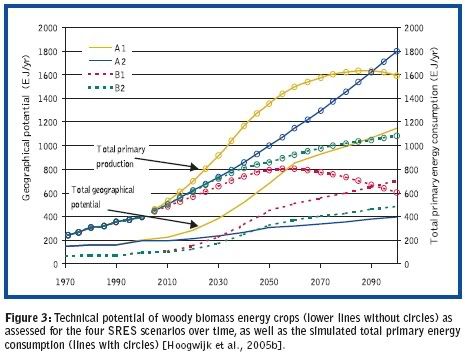
In the document titled 'Potential Contribution of Bioenergy to the World's Future Energy Demand', the analysts put the total energy potential for sustainably produced biomass at 1100 Exajoules (EJ) by 2050 under a most optimal scenario. In a more average scenario bioenergy's contribution to the world's future energy supply ranges between 20 and 50% (200 - 400 EJ), depending on different energy demand scenarios. Some 130-260 EJ of this amount would be made up of liquid biofuels, more than the world's current total mineral oil output. Over the longer term (2100), more land becomes available and the share of bioenergy increases (graph 1, click to enlarge). For this contribution to materialize, the development and deployment of perennial crops in developing countries is of key importance, as is the creation of international markets. The IEA Bioenergy Excom states that for many rural communities in developing countries such a situation would offer good opportunities for socio-economic development.

Current and future energy demand
The researchers note that global current fossil energy use totals 388 EJ. Energy demand is expected to at least double or perhaps triple during this century. At the same time, concentrations of greenhouse gases (GHGs) in the atmosphere are rising rapidly, with fossil fuel-derived CO2 emissions being the most important contributor. In order to minimise related global warming and climate change impacts, GHG emissions must be reduced to less than half the global emission levels of 1990. In addition, security of energy supply is a global issue. A large proportion of known conventional oil and gas reserves are concentrated in politically unstable regions, and increasing the diversity in energy sources is important for many nations to secure a reliable and constant supply of energy.
In this context, biomass for energy can play a pivotal role. Energy from biomass, when produced in a sustainable manner, can drastically reduce GHG emissions compared to fossil fuels. Most countries have biomass resources available, or could develop such a resource, making biomass a more evenly spread energy supply option across the globe. It is a versatile energy source, which can be used for producing power, heat, liquid and gaseous fuels, and also serves as a feedstock for materials and chemicals.
Due to rising prices for fossil fuels (especially oil, but also natural gas and to a lesser extent coal) the competitiveness of biomass use has improved considerably over time. In addition, the development of CO2 markets (emission trading), as well as ongoing learning and subsequent cost reductions for biomass and bioenergy systems, have strengthened the economic drivers for increasing biomass production, use, and trade.

The IEA Bioenergy ExCom notes that biomass and bioenergy are now a key option in energy policies. Security of supply, an alternative for mineral oil and reduced carbon emissions are key reasons. Targets and expectations for bioenergy in many national policies are ambitious, reaching 20-30% of total energy demand in various countries. Similarly, long-term energy scenarios also contain challenging targets.

Sufficient biomass resources and a well-functioning biomass market that can assure reliable, sustainable, and lasting biomass supplies are crucial preconditions to realise such ambitions. Relatively recently, international trade in biomass resources has become part of the portfolio of market dealers and volumes traded worldwide have increased at a very rapid pace with an estimated doubling of volumes in several markets over the past few years.

Global biomass potential
Various biomass resource categories can be considered: residues from forestry and agriculture, various organic waste streams and, most importantly, the possibilities for dedicated biomass production on land of different categories, e.g., grass production on pasture land, wood plantations and sugar cane on arable land, and low productivity afforestation schemes for marginal and degraded lands.

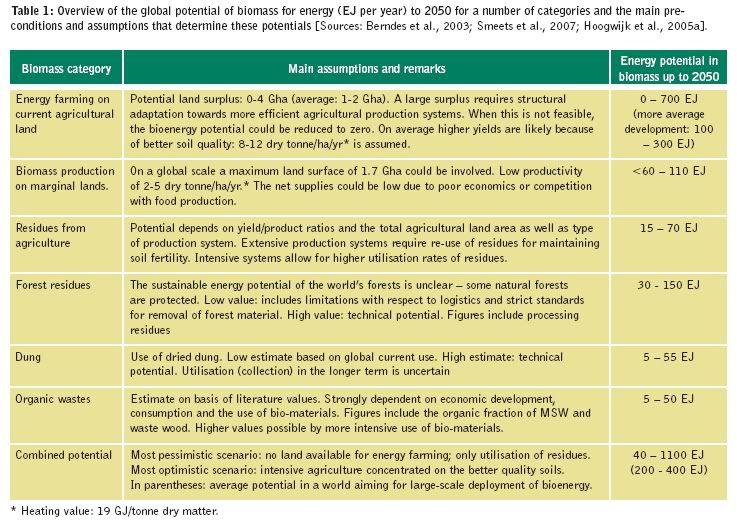
The potential for energy crops depends largely on land availability considering that worldwide a growing demand for food has to be met, combined with environmental protection, sustainable management of soils and water reserves, and a variety of other sustainability requirements. Given that a major part of the future biomass resource availability for energy and materials depends on these complex and related factors, it is not possible to present the future biomass potential in one simple figure. Table 1 (click to enlarge) provides a synthesis of analyses of the longer term potential of biomass resource availability on a global scale. Also, a number of uncertainties are highlighted that can affect biomass availability:

These estimates are sensitive to assumptions about crop yields and the amount of land that could be made available for the production of biomass for energy uses, including biofuels. Critical issues include:
  • Competition for water resources: Although the estimates presented in Table 1 generally exclude irrigation for biomass production, it may be necessary in some countries where water is already scarce.
  • Use of fertilisers and pest control techniques: Improved farm management and higher productivity depend on the availability of fertilisers and pest control. The environmental effects of heavy use of fertiliser and pesticides could be serious.
  • Land-use: More intensive farming to produce energy crops on a large-scale may result in losses of biodiversity. Perennial crops are expected to be less harmful than conventional crops such as cereals and seeds, or even able to achieve positive effects. More intensive cattle-raising would also be necessary to free up grassland currently used for grazing.
  • Competition with food and feed production: Increased biomass production for biofuels out of balance with required productivity increases in agriculture could drive up land and food prices.
Taking a more average estimate than the most optimal scenario, the researchers think future biomass production on different types of land could be broken down as follows:

Energy farming on currrent agricultural land
Energy farming on current agricultural (arable and pasture) land could, with projected technological progress, contribute 100 - 300 EJ annually, without jeopardising the world's future food supply. A significant part of this potential (around 200 EJ in 2050) for biomass production may be developed at low production costs in the range of E2/GJ assuming this land is used for perennial crops.

Energy farming on marginal and degraded land
Another 100 EJ could be produced with lower productivity and higher costs, from biomass on marginal and degraded lands. Regenerating such lands requires more upfront investment, but competition with other land-uses is less of an issue and other benefits (such as soil restoration, improved water retention functions) may be obtained, which could partly compensate for biomass production costs.

Biomass wastes and residues
Combined and using the more average potential estimates, organic wastes and residues could possibly supply another 40-170 EJ, with uncertain contributions from forest residues and potentially a significant role for organic waste, especially when biomaterials are used on a larger scale.

In total, the bioenergy potential could amount to 400 EJ per year during this century. This is comparable to the total current fossil energy use of 388 EJ.

Key to the introduction of biomass production in the suggested orders of magnitude is the rationalisation of agriculture, especially in developing countries. There is room for considerably higher landuse efficiencies that can more than compensate for the growing demand for food.

The development and deployment of perennial crops (in particular in developing countries) is of key importance for bioenergy in the long run. Regional efforts are needed to deploy biomass production and supply systems adapted to local conditions, e.g., for specific agricultural, climatic, and socio-economic conditions.

Conversion options
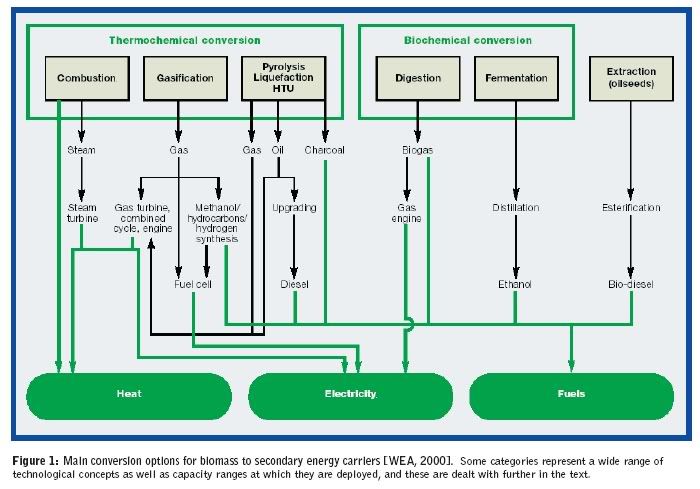
Conversion routes for producing energy carriers from biomass are plentiful. Figure 1 (click to enlarge) illustrates the main conversion routes that are used or under development for production of heat, power and transport fuels. Key conversion technologies for production of power and heat are combustion and gasification of solid biomass, and digestion of organic material for production of biogas. Main technologies available or developed to produce transportation fuels are fermentation of sugar and starch crops to produce ethanol, gasification of solid biomass to produce syngas and synthetic fuels (like methanol and high quality diesel), and extraction of vegetal oils from oilseed crops, which can be esterified to produce biodiesel.

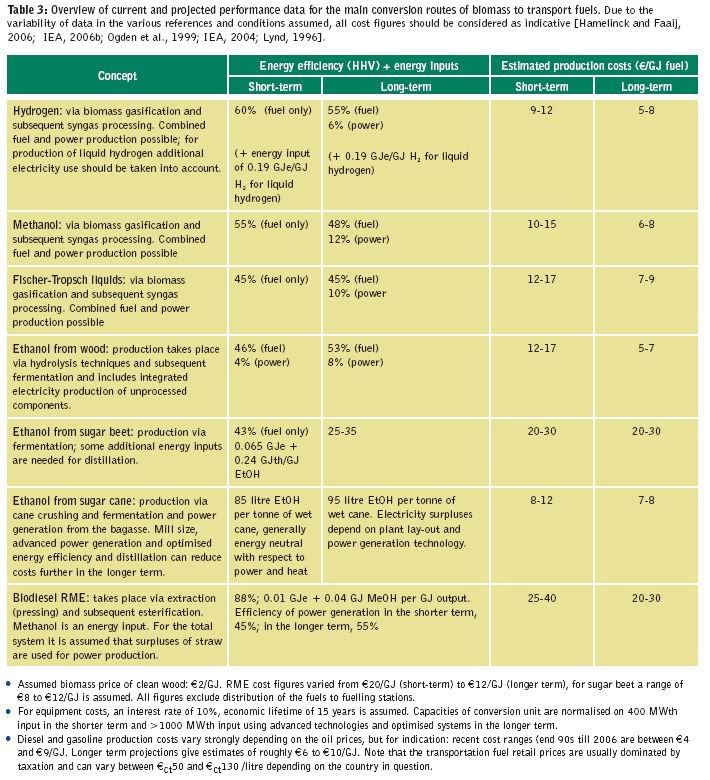
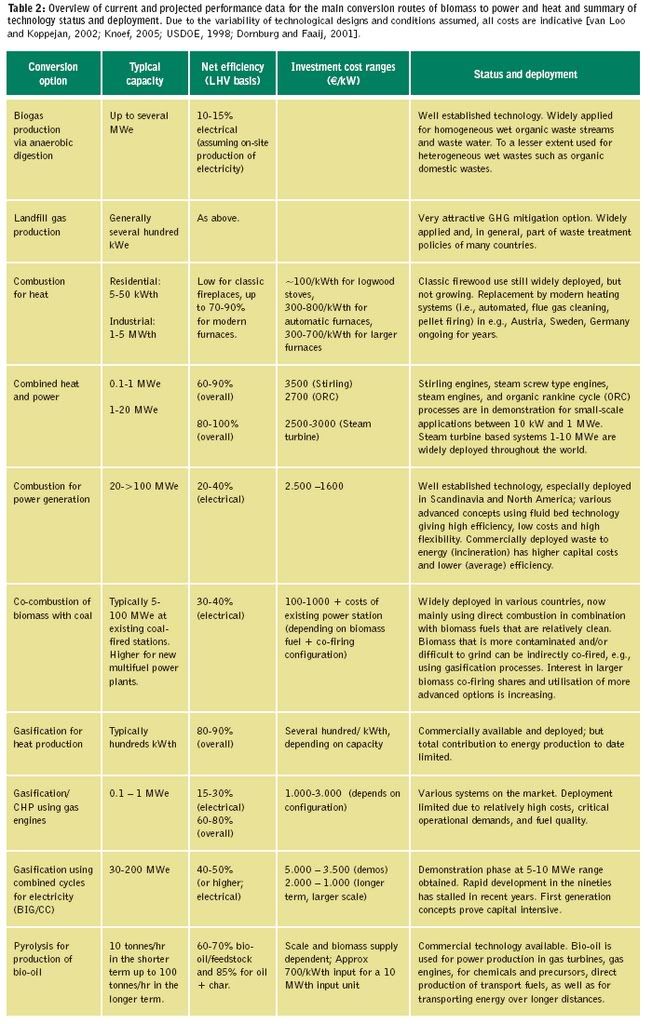
The various technological options are in different stages of deployment and development. Tables 2 and 3 (click to enlarge) provide a compact overview of the main technology categories and their performance with respect to energy efficiency and energy production costs. The 'End-use Applications' section discusses the likely deployment of various technologies for key markets in the short- and the long-term.

Current and projected performance data for transport biofuel production techniques

Current and projected performance data for bioenergy production techniques

Short-term represents best available technology or the currently noncommercial systems which could be built around 2010. Long-term represents technology with considerable improvement, large-scale deployment, and incorporation of process innovations that could be realised around 2040. This is also the case for the biomass supplies, assuming biomass production and supply costs around E2/GJ for plants which are close to the biomass production areas.

Market development and international trade
Biofuel and biomass trade flows are modest compared to total bioenergy production but are growing rapidly. Trade takes place between neighbouring regions or countries, but increasingly trading is occurring over long distances.
The possibilities for exporting biomass-derived commodities to the world's energy markets can provide a stable and reliable demand for rural regions in many developing countries, thus creating an important incentive and market access that is much needed. For many rural communities in developing countries such a situation would offer good opportunities for socio-economic development. Sustainable biomass production may also contribute to the sustainable management of natural resources.
Importing countries on the other hand may be able to fulfil cost-effectively their GHG emission reduction targets and diversify their fuel mix.

Given that several regions of the world have inherent advantages for producing biomass (including lignocellulosic resources) and biofuels in terms of land availability and production costs, they may gradually develop into net exporters of biomass and biofuels.

International transport of biomass (or energy carriers from biomass) is feasible from both the energy and the cost points of view. The import of densified or pre-treated lignocellulosic biomass from various world regions may be preferred, especially for second generation biofuels, where lignocellulosic biomass is the feedstock and large-scale capital intensive conversion capacity is required to achieve sound economics. This is a situation comparable to that of current oil refineries in major ports which use oil supplies from around the globe.

Very important is the development of a sustainable, international biomass market and trade. Proper standardisation and certification procedures are to be developed and implemented to secure sustainable biomass production, preferably on the global level. Currently, this is a priority for various governments, market players, and international bodies. In particular, competition between production of food, preservation of forests and nature and use of land for biomass production should be avoided. As argued, this is possible by using lignocellulosic biomass resources that can come from residues and wastes, which are grown on non-arable (e.g., degraded) lands, and in particular by increased productivity in agricultural and livestock production.

Demonstration of such combined development where sustainable biomass production is developed in conjunction with more efficient agricultural management is a challenge. However, this is how bioenergy could contribute not only to renewable energy supplies and reducing GHG emissions, but also to rural development.

Biomass and bioenergy in the world's future energy supply
What contribution can biomass make to future global energy (and bio-products) demand? A wide diversity of projections of potential future energy demand and supply exist. Typically, scenarios are used to depict uncertainties in future developments and possible development pathways. The 'Special Report on Emission Scenarios' (SRES) developed in the context of the Intergovernmental Panel on Climate Change (IPCC) is based on four storylines that describe how the world could develop over time.

Differences between the scenarios concern economic, demographic, and technological development and the orientation towards economic, social, and ecological values. The storylines denoted A1 and A2 are considered societies with a strong focus towards economic development. In contrast, the B1 and B2 storylines are more focused on welfare issues and are ecologically orientated. While the A1 and B1 storylines are globally oriented, with a strong focus towards trade and global markets, the A2 and B2 storylines are more regionally oriented.

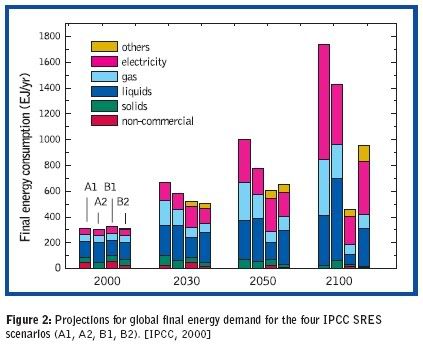
Graph 2 shows the total energy demand for secondary energy carriers (such as transport fuels, electricity, gas, etc.) in four distinct years of the four scenarios. Clearly, the various scenarios show large differences in demand and energy mix, as a result of variations in population dynamics, and economic and technological development.

Total primary (the presumed mix of fossil fuels, renewables and nuclear) energy demand in 2050 varies between about 800 EJ and 1,400 EJ. As discussed previously, the total primary biomass supplies in 2050 could amount to 200-400 EJ. This is conservative relative to the increased availability of primary biomass for the different SRES scenarios, shown in graph 1. The circled lines depict the total primary energy demand per scenario, corresponding with the projected energy consumption data in graph 2. All scenarios project a gradual development of biomass resource availability, largely corresponding to the (potentially) gradually increased availability of land over time.

Assuming conversion to transport fuels with an expected average conversion efficiency of 65%, this would result in 130-260 EJ of fuel. This is up to double the current demand and a similar range to the expected demand in the SRES scenarios discussed above.

Competing markets for biomass?
Biomass cannot realistically cover the whole world's future energy demand. On the other hand, the versatility of biomass with the diverse portfolio of conversion options, makes it possible to meet the demand for secondary energy carriers, as well as biomaterials. Currently, production of heat and electricity still dominate biomass
use for energy.

The question is therefore what the most relevant future market for biomass may be. For avoiding CO2 emissions, replacing coal is at present a very effective way of using biomass. For example, co-firing biomass in coal-fired power stations has a higher avoided emission per unit of biomass than when displacing diesel or gasoline with ethanol or biodiesel.

However, replacing natural gas for power generation by biomass, results in levels of CO2 mitigation similar to second generation biofuels. Net avoided GHG emissions therefore depend on the reference system and the efficiency of the biomass production and utilisation chain. In the future, using biomass for transport fuels will gradually become more attractive from a CO2 mitigation perspective because of the lower GHG emissions for producing second-generation biofuels and because electricity production on average is expected to become less carbon-intensive due to increased use of wind energy, PV and other solar-based power generation, carbon capture and storage technology, nuclear energy, and fuel shift from coal to natural gas.

In the shorter term, however, careful strategies and policies are needed to avoid brisk allocation of biomass resources away from efficient and effective utilisation in power and heat production or in other markets, e.g., food. How this is to be done optimally will differ from country to country.

The use of biomass for biomaterials will increase, both in well established markets (such as paper, construction) and for possibly large new markets (such as bio-chemicals and plastics) as well as in the use of charcoal for steel making. This adds to the competition for biomass resources, in particular forest biomass, as well as land for producing woody biomass and other crops. The additional demand for bio-materials could surpass the current global biomass use (which is some 10% of the global energy use).

However, increased use of bio-materials does not prohibit the production of biofuels (and electricity and heat) per se. Construction wood ends up as waste wood, paper (after recycling) as waste paper, and bio-plastics in municipal solid waste. Such waste streams still qualify as biomass feedstock and are available, often at low or even negative costs.

Cascading biomass over time in fact provides an essential strategy to optimise the CO2 mitigation effect of biomass resources. The IPCC (2007) reports that the largest sustained mitigation benefit will result from a sustainable forest management strategy aimed at maintaining or increasing forest carbon stocks, while producing an annual sustained yield of timber, fibre, or energy from the forest. This could for example involve conventional forests producing material cascades (e.g., solid wood products, reconstituted particle/fibre products, paper products) with wood or fibre that cannot be reused/recycled being used for energy.

Comparison with other energy supply options
State-of-the-art scenario studies on energy supply and mitigation of climate change agree that all climate-friendly energy options are needed to meet the future world's energy needs and simultaneously drastically reduce GHG emissions.

Intermittent sources such as wind and solar energy have good potential, but their deployment is also constrained by their integration into electricity grids. In addition, electricity production from solar energy is still expensive.

Hydropower has a limited potential and commercial deployment of geothermal and ocean energy, despite their large theoretical potentials, has proved to be complex.

Biomass in particular can play a major and vital role in production of carbon-neutral transport fuels of high quality as well as providing feedstocks for various industries (including chemical). This is a unique property of biomass compared to other renewables and which makes biomass a prime alternative to the use of mineral oil.

Given that oil is the most constrained of the fossil fuel supplies, this implies that biomass is particularly important for improving security of energy supply on the global as well on a national level.

In addition, competitive performance is already achieved in many situations using commercial technologies especially for producing heat and power. It is therefore expected that biomass will remain the most important renewable energy carrier for many decades to come. Conversion to power with an assumed average efficiency of 50% logically results in 100-200 EJe, also a similar range to the expected future demand.

Additional future demand for (new) biomaterials such as bio-plastics could add up to 50 EJ halfway through this century.
It is clear, therefore, that biomass can make a very large contribution to the world's future energy supply. This contribution could range from 20% to 50%. The higher value is possible when growth in energy demand is limited; for example, by strongly increased energy efficiency.
Opportunities for bioenergy
Biomass is a versatile energy source that can be used for production of heat, power, and transport fuels, as well as biomaterials and, when produced and used on a sustainable basis, can make a large contribution to reducing GHG emissions.

Biomass is the most important renewable energy option at present and is expected to maintain that position during the first half of this century and likely beyond that. Currently, combined heat and power (CHP), co-firing and various combustion concepts provide reliable, efficient, and clean conversion routes for converting solid biomass to power and heat.

Production and use of biofuels are growing at a very rapid pace. Although the future role of bioenergy will depend on its competitiveness with fossil fuels and on agricultural policies worldwide, it seems realistic to expect that the current contribution of bioenergy of 40-55 EJ per year will increase considerably.
A range from 200 to 400 EJ may be expected during this century, making biomass a more important energy supply option than mineral oil today – large enough to supply one-third of the world's total energy needs.
Bioenergy markets provide major business opportunities, environmental benefits, and rural development on a global scale. If indeed the global bioenergy market is to develop to a size of 300 EJ over this century (which is quite possible given the findings of recent global potential assessments) the value of that market at E4-8/GJ (considering pre-treated biomass such as pellets up to liquid fuels such as ethanol or synfuels) amounts to some E1.2-2.4 trillion per year.

Feedstocks can be provided from residues from agriculture, forestry, and the wood industry, from biomass produced from degraded and marginal lands, and from biomass produced on good quality agricultural and pasture lands without jeopardising the world's food and feed supply, forests, and biodiversity.

The pre-condition to achieve such a situation is that agricultural land-use efficiency is increased, especially in developing regions.

Considering that about one-third of the above-mentioned 300 EJ could be supplied from residues and wastes, one-quarter by regeneration of degraded and marginal lands, and the remainder from current agricultural and pasture lands, almost 1,000 million hectares worldwide may be involved in biomass production, including some 400 million hectares of arable and pasture land and a larger area of marginal/degraded land. This is some 7% of the global land surface and less than 20% of the land currently in use for agricultural production.

There are rapid developments in biofuel markets: increasing production capacity, increasing international trade flows, increased competition with conventional agriculture, increased competition with forest industries, and strong international debate about the sustainability of biofuels production.

Biomass is developing into a globalised energy source with advantages (opportunities for producers and exporters, more stability in the market) and concerns (competing land use options, sustainability).

Biomass trading and the potential revenues from biomass and biomass-derived products could provide a key lever for rural development and enhanced agricultural production methods, given the market size for biomass and biofuels. However, safeguards (for example, well-established certification schemes) need to be installed internationally to secure sustainable production of biomass and biofuels. In the period before 2020 substantial experience should be obtained with sustainable biomass production under different conditions as well as with deploying effective and credible certification procedures.

Especially promising are the production of electricity via advanced conversion concepts (i.e., gasification, combustion, and co-firing) and biomass-derived fuels such as methanol, hydrogen, and ethanol from lignocellulosic biomass. Ethanol produced from sugar cane is already a competitive biofuel in tropical regions and further improvements are possible.

Both hydrolysis-based ethanol production and production of synfuels via advanced gasification from biomass of around E2/GJ can deliver high quality fuels at a competitive price with oil down to US$45/ barrel.

Net energy yields per unit of land surface are high and GHG emission reductions of around 90% can be achieved, compared with fossil fuel systems. Flexible energy systems, in which biomass and fossil fuels can be used in combination, could be the backbone for a low risk, low-cost, and low carbon emission energy supply system for large-scale supply of fuels and power, providing a framework for the evolution of large-scale biomass raw material supply systems.

References:
IEA Bioenergy Executive Committee: Potential Contribution of Bioenergy to the World's Future Energy Demand - September 2007.


Tuesday, September 11, 2007

China aims high in renewable energy usage

China will increase the portion of renewable resources to 15 percent in its total energy consumption in 2020 in a bid to reduce greenhouse gas emissions and pursue sustained economic growth, according to a national plan published on Tuesday.

China's renewable energy usage will total 600 million tons of coal equivalent by 2020, compared with 166 million tons in 2005 which accounted for 7.5 percent of the country's total energy consumption.

The plan would cost China two trillion yuan (US$266.7 billion) during the 2006-2020 period, said Chen Deming, vice minister in charge of the National Development and Reform Commission (NDRC).

As coal currently feeds most of China's energy needs and causes serious pollution, the plan highlights the development of hydropower, wind power, biomass and solar energy.

By 2020, the country's installed hydropower capacity is expected to reach 300 million kilowatts (kW), wind power capacity 30 million kW, biomass power 30 million kW and solar power 1.8 million kW.

According to the plan published by NDRC, China will also provide electricity to remote, off-grid regions and alleviate fuel shortages in rural areas by using renewable energy.

By 2020, about 300 million rural people will use biogas as their main fuel, when China will use 10 million tons of bio-ethanol and two million tons of bio-diesel to replace 10 million tons of oil annually.

Wednesday, September 5, 2007

China Grand Forestry eyes biomass energy project

HONG KONG, Sept 6 (Reuters) - Ecological forestry company China Grand Forestry Resources Group Ltd said it planned to buy a biomass energy project with a market value of around US$962 million as it moves into a new area of high-growth potential.

The company said in a statement late on Wednesday it intended to buy two Chinese firms that hold a biomass energy project, which extracts bio-diesel oil from the fruit of a Jatropha Curcas tree and uses it for power generation.

The cost of the deal was subject to further negotiations.

The deal would be settled by a combination of cash, an issue of new shares at HK$2.5 apiece, and an issue of convertible notes with a conversion price of HK$2.5 per share, China Grand said.

Shares in the company have more than doubled so far this year to close at HK$2.51 on Tuesday prior to a trading suspension. Trading in the shares will resume on Thursday.

The assets held by the two Chinese firms include a patent for a new species of Jatropha Curcas tree, forest land in China and in Southeast Asia, a bio-diesel refinery plant which is under construction, and a hotel.

The fair market value of the assets to be shown in a valuation report should not be less than HK$7.5 billion (US$962 million), the company said.

Sunday, August 26, 2007

The Ultimate Garbage Disposal

A power station eats up dirty landfill and churns out clean electricity.

by Tony McNicol

garbage.jpg

Plasma turns garbage into gas that powers a turbine at a Japanese facility.

What could be better than a power station that eats up dirty landfill and churns out clean electricity? One facility in Utashinai, Japan, has been doing just that since 2003, using plasma—an electrically induced stream of hot, charged particles—to process up to 220 tons of municipal solid waste a day. Now a bigger and better $425 million plant is scheduled for completion by 2009 in Saint Lucie County, Florida. The operator, Atlanta-based Geoplasma, expects it to generate 160 megawatts of electricity—enough to power 36,000 homes—from a daily diet of trash.

At the plant, garbage will be superheated to more than 10,000 degrees Fahrenheit—about the temperature of the sun's surface—by a NASA-developed plasma torch. Organic components will be gasifed by the heat; the inorganic remainder will be melted and removed. Syngas, a mixture of carbon monoxide and hydrogen, will be extracted from the gas output and used to drive turbines and generate electricity. Gases from the plant will be processed to remove dangerous compounds like dioxins, and the company pledges that emissions will be well under state and federal environmental limits. Heavy metals from the inorganic dross will be collected and sold as scrap.

Geoplasma hopes to do better than the Japanese facility, which generates just enough power for internal consumption. Operators there say that a chronic shortage of trash and unfavorable electricity prices have hampered the plant's operations. The Florida facility, however, will be built right next to a large landfill, which the company will dig into at a daily rate of 1,000 tons—along with 2,000 tons of brand-new trash to be trucked in. Geoplasma is negotiating contracts to sell three-quarters of the electricity generated by the plant to a utility company. "It provides a solution to two growing problems for communities: increased waste and the need for more energy," says Geoplasma president, Hilburn O. Hillestad. "Garbage disposal problems and rising energy costs have driven the economics of a plasma arc solution beyond possible to necessary."

What is Plasma Gasification?

Plasma gasification is a new garbage disposal solution using plasma technology. This process of garbage disposal is self-sustaining and converts garbage into electricity. Although plasma technology has been around for years, its application to garbage disposal was never seriously considered because the conventional approach of using landfills was less expensive (even with tipping fees and transportation costs). It was only recently - with landfills in scarce supply and with fuel costs on a constant rise - that the plasma gasification process has merited deeper consideration.

Plasma Technology

The basics of plasma technology are straightforward. A high-voltage current is passed between two electrodes to create a high-intensity arc, which in turn rips electrons from the air and converts the gas into plasma or a field of intense and radiant energy.

This is the process behind fluorescent and neon lighting where low voltage electricity passing between electrodes in a sealed glass tube containing an inert gas excites the electrons in the gas. The gas releases radiant energy and electric arc welding or cutting; this electricity passing between electrodes creates plasma that can melt metal.

Plasma Gasification

First, garbage is fed into an auger, a machine which shreds it into smaller pieces. These are then fed into a plasma chamber - a sealed, stainless steel vessel filled with either nitrogen or ordinary air. A 650-volt electrical current is passed between two electrodes; this rips electrons from the air and creates plasma.

A constant flow of electricity through the plasma maintains a field of extremely intense energy powerful enough to disintegrate the shredded garbage into its component elements. The byproducts are a glass-like substance used as raw materials for high-strength asphalt or household tiles and "syngas".

Syngas is a mixture of hydrogen and carbon monoxide and it can be converted into fuels such as hydrogen, natural gas or ethanol. Syngas (which leaves the converter at a temperature of around 2,200 degrees Fahrenheit) is fed into a cooling system which generates steam. This steam is used to drive turbines which produce electricity - part of which is used to power the converter, while the rest can be used for the plant's heating or electrical needs, or sold back to the utility grid.

Therefore, aside from the initial power supply from the community's electrical grid, the whole machine can produce the electricity it needs for operations. It also produces materials that can be sold for commercial use so, at some point, the plasma gasification system will generate profit for its users.

Current and Future Applications

The benefits of the system are evident. It is self-sustaining after the initial electrical charge is used; it is environmentally friendly; and it produces materials that have commercial applications or use and thus can generate profit.

Aside from disposing of newly-produced garbage, the system can also be used to dispose of accumulated landfill garbage so land reclamation is entirely possible. Another application planned is using the syngas as a base for producing hydrogen in commercial quantities, which will be used as fuel for hydrogen-powered vehicles.

Thursday, August 23, 2007

Biomass Gas & Electric to Build Largest Wood-Fired Power Generating Plant in U.S.

Biomass Gas & Electric Company LLC, working with Progress Energy Florida, will be constructing a 75 megawatt waste wood fired electricity plant in Florida. IT will be the largest of its kind in the country. More here.

Saturday, August 18, 2007

Mitsubishi Corp to invest in three types of biofuels both in Japan and abroad

Japan's largest trading company Mitsubishi Corp. aims to take a slice of the growing green fuel market with a planned annual capacity of 2 billion liters (530 million gallons) of green ethanol by 2017, a senior manager tell Reuters.

The new plants will be based in Japan and other parts of Asia as well as in South America, where supply of feedstock is sustainable, competitive and ample, says Takashi Miyazaki, a general manager at Mitsubishi's renewables energy business unit.

Mitsubishi in April set up a team of 15 staff to produce and market three types of green fuel: (cellulosic) ethanol, (second-generation) green diesel and biomass fuel pellets.
  • Ethanol: In one of the first few deals, Mitsubishi this month invested 300 million yen (€1.9/$2.6 million) to take a 34-percent stake in a government-backed project to build an ethanol plant with annual output of 15 million liters on the northern island of Hokkaido. Kirin Brewery Co. Ltd., Japan's second largest brewer, is providing fermentation technology to the Hokkaido project.
  • Biodiesel: Miyazaki also said Mitsubishi plans to produce 1 to 1.5 million tonnes a year of biodiesel by 2017 after building plants in Asia or in Central and South America. The volume is compared with 5 million tonnes a year of the existing rapeseed-origin biodiesel market in Europe. Japanese household goods maker Lion Corp. will provide expertise when Mitsubishi starts its biodiesel projects. Lion has developed technology to produce methylester sulfonate, used in laundry detergents, from palm oil, a major feedstock for biodiesel in Asia.
  • Pellets: on bio-pellets used to co-fire with coal and used to reduce CO2 emissions, Mitsubishi plans for a capacity of 4 million tonnes a year by 2017, of which domestic output will be 20,000 to 30,000 tonnes. Global demand for bio-pellets made from wood waste is expected to grow to 150 million tonnes a year by 2030, up from 8 million tonnes currently, according to the company's estimate.
The company is not new to the bioenergy sector. Recently it signed a comprehensive cooperation agreement with Dynamotive, a developer of second-generation biofuels based on the pyrolysis of biomass. Mitsubishi also agreed to a 30-year ethanol supply agreement with Brazilian producer Sao Martinho. But the Japanese trading firm now wants to go beyond trading and actively pursues a stake in the production chain:

The production of renewable energy - biofuels, biomass, solar energy and wind energy - has become one of Mitsubishi's new focused business segments.

Analysts said investing in unconventional areas is an industry-wide trend as trading firms look for a new source of profit growth. "I think biomass energy is relatively contiguous with the company's existing business," said Ben Wetmore, senior analyst at Mizuho Securities.

Global demand for biomass ethanol is set to leap to 280 billion liters (74 billion gallons) a year by 2030, boosted by policy incentives and new technology cutting production costs, more than six times as much as the 40 billion liters (10.5 billion gallons) produced currently, according to the company's forecast.

"Manufacturing is the most profitable in this field of business as we think supplies will have to catch up with high-flying demand in the next few decades," Miyazaki said. But he declined to elaborate on details of Japan's top trading company's investment plans for renewable fuels.

"It's difficult to sum it up. We understand it takes four to five years to build a facility and five to six years to make profits out of it," he said. "Also, situations differ from one country to another," he added.

Plasma Gasification Transforms Garbage into Clean Energy

It sounds too good to be true: a machine that can get rid of almost any kind of waste at a fraction of the cost of today's disposal techniques, eliminate existing landfills, and produce an excess of clean energy to be sold back to the grid. This very realistic process is called plasma gasification.

One of the leading companies that is developing plasma gasification is called Startech. The company was founded in 1988 by Joseph Longo, the engineer behind the invention of the trash compactor in the '70s. As Longo explains, plasma gasification works somewhat like the big bang in reverse, as you get nothing from something.

A sealed, stainless steel vessel is filled with a stable gas, such as pure nitrogen. When a 650-volt current passes between two electrodes, electrons are ripped from the air, converting the gas into plasma. As current continues to flow, it creates an intense energy field with plasma arcs, which are like lightning. The radiant energy of the 30,000˚F plasma arcs disintegrates trash into its basic elements by tearing apart the materials' molecular bonds.

Tile, wood, nails, glass, metal, plastic, diapers-almost any material can be broken down with Startech's technology, eliminating the time-consuming, tedious and costly process of sorting waste by hand. (Nuclear waste is an exception due to its indestructible isotopes.)

Only two by-products come out the opposite end of the machine: an obsidian-like glass and "syngas," which is a mixture of hydrogen and carbon monoxide. The glass can be recycled as a raw material for applications such as tiles and asphalt.

The syngas is one of the biggest attractions of plasma gasification. The 2,200˚F mixture can be cooled to generate steam for electricity, or converted into fuel such as ethanol, natural gas or hydrogen. About two-thirds of the fuel powers the plasma machine to make it self-sustaining, and the rest could be used for onsite electrical use or sold back to the grid for profit.

The power of plasma gasification makes it not only an environmentally clean technique, but also economic. Longo says that a Startech machine that costs about $250 million could break down about 2,000 tons of waste daily-enough to accommodate the needs of a city of a million people. Such an investment could pay for itself in about 10 years, not even including the money made from selling the excess electricity and syngas.

With the rising transportation prices and concerns about the environment, countries and organizations are taking notice. Three waste-disposal executives who recently formed a partnership called U.S. Energy plan to build the first plasma gasification plant on Long Island, New York.

New York City currently pays about $400 million a year to get rid of its trash, due to many closed landfalls around the city, incinerators being banned, and the city having to transport its trash to Virginia and Pennsylvania. A few Startech machines could reduce the current cost of $90 per ton to $36 per ton-and after generating surplus electricity, the city would actually make $15 per ton.

U.S. Energy's Paul Marazzo has one concern, though. Many landfill operators are politically well-connected, and enjoy getting a million dollars a month out of debris. With a plasma gasification converter, these businessmen would lose much of their revenue.

Besides New York, plasma gasification machines could be built literally all over the world. The National Science Foundation might install a system at McMurdo Station in Antarctica, the Vietnamese government may build one to get rid of stockpiles of Agent Orange left behind by the US military, and an assortment of investors from China, Japan, Romania, Poland, Italy, Russia, Brazil, Venezuela, the U.K., Mexico and Canada are interested. In Panama, overflowing landfills are polluting groundwater and drinking water, causing outbreaks of cholera and hepatitis A and B.

With so much disease being caused by pollution-much of which comes from excessive waste-many countries could benefit from a plasma gasification system.

Wednesday, August 15, 2007

BioEnergy: Buzz or Evolution?

Dr. Fernando Preto, talks about potential for Bioenergy   (photo opinion250 staff)

Since the day the forest industry learned there was a limited shelf life for mountain pine beetle trees, there has been a push to diversify the economy of not only Prince George, but all northern communities which have many of their eggs in the same wood fiber basket.

Enter BioEnergy. 

Energy produced through the burning of biofuels.  Already in Canada, 6% of all energy used comes from biomass energy. 80% of the bioenergy is being used in the pulp and paper industry, the remaining 20 % is being used to heat our homes.

Canada already produces 200 million litres of bioethanol from grain products, and 200 million litres a year of biodiesel from waste fats and oils.   Dr. Fernando Preto says that production level isn't astounding, but "It is a start".  Preto is  the Group Leader for Biomass Conversion in Natural Resources Canada's CANMET Energy Technology Centre in Ottawa.  He was the guest speaker at a  Prince George Chamber of Commerce luncheon.

The buzz for Prince George has been the development of pellets for which there is a growing demand and market. The problem says Preto, is that there is no fiscal incentive to use this type of fuel, and cost is a major concern "The cost of converting the wood to bio mass energy has to be cost effective," right now he says, the cost difference  is too close to make it cost effective to  switch to bio-mass.  "There would have to be some sort of incentive, whether it is financial or a carbon credit, something, otherwise the cost of the energy will be too high." 

Will Government be willing to offer some incentive?  "Your guess is as good as mine" says Preto. 

Right now, pellets are being produced with the residue from sawmills, but market demand for dimensional lumber and plywood means that supply of residue may be difficult to obtain. "You have to have some other value added process so the costs are low"

Preto says there are also challenges for transportation fuels " If we are looking for transportation fuels we need to look somewhere else.  By the year 2025  we could be producing 4 billion litres of ethanol from grain, but that is only 5% of the  Canadian fuel demand and to create that 4 billion litres, we used 20% of all the grain produced in Canada, doesn't really sound very promising."

Preto says "I think there is a lot of opportunity but I wouldn't think of harvesting it just for energy.  I  think you have to look at other things.  For example, the pellet industry works right now here because  they get their wood from sawmills which is a residue.  So if you can harvest the pine  for another use first, and have  energy  as well then you're o.k, but you have to have some higher value  added thing you are going for.  Just  doing  it for energy is more expensive."

Preto  says there is a huge potential including using portable  machines on site that can turn wood waste into a  biofuel oil.  The transportation problems are then reduced. "There is huge potential but it will take a little bit of investment and some dedication."

Monday, August 13, 2007

Sampoerna to Produce 19% of Indonesia's Ethanol Output by 2010

Aug. 14 (Bloomberg) -- Indonesian billionaire Putera Sampoerna, who sold his cigarette company for about $2 billion two years ago, plans to build ethanol plants that may account for 19 percent of the nation's output by 2010.

Sampoerna, 59, expects his first ethanol plant to be ready in the next two years, he said in an interview in Jakarta on Aug. 10. He wants to produce 375,000 kiloliters of ethanol a year, out of the country's estimated output of 2 million kiloliters, according to the Ministry of Energy & Mineral Resources.

``We are already far along in designing our first ethanol plant,'' Sampoerna said. ``We are doing ethanol in a big way.''

Sampoerna, who sold his family's stake to Altria Group Inc., wants to tap the rush to meet government regulations worldwide that make it mandatory for part of the fuel used by trucks and cars to come from biofuels. Indonesia needs to boost ethanol production 20-fold to meet demand for 1.7 million kiloliters of the fuel in three years should the government enforce fuel companies to mix 10 percent of the biofuel to gasoline, according to state oil company PT Pertamina.

``It's a good move as the Indonesian government is now promoting biofuel projects seriously,'' said Stefanus Darmagiri, an analyst at PT UOB Kay Hian Securities in Jakarta. ``But we are yet to hear what incentives, including tax breaks, the government may offer to companies producing biofuels.''

Vast Land

The National Bio-diesel Development Team, a taskforce formed by Indonesia last year, has proposed that the government draw up regulations to make the use of biofuel, especially by industries, mandatory, Evita Legowo, secretary of the taskforce, said in an interview on Aug. 10.

``Making it compulsory would further make the sector attractive to investors,'' Legowo said. Bio-diesel is sold at 216 gasoline retail stations in Jakarta and Surabaya, the two biggest cities in Indonesia. Ethanol is sold at 12 gas stations in three Indonesian cities, Legowo said.

Indonesia has more than 6 million hectares of land available for crops that make biofuel, Alhilal Hamdi, chairman of the taskforce, said on July 24 last year, after the group's establishment. About 3 million hectares could be used for oil palm, 1.5 million hectares each for jatropa and cassava, and about half a million hectares for sugar cane, Hamdi said.

``Nobody can compete with Indonesia in agriculture and forestry,'' Sampoerna said. ``So let's develop those. If you want to sit there and develop industrial programs or incentives, it should be related to the agriculture.''

Investments

Sampoerna may set up his ethanol plant in Madiun and Pawonsari on Java island, according to the energy ministry.

Total production capacity of fuel grade bio-ethanol in Indonesia was 82,500 kiloliters a year as of the end of April, according to Indonesia's energy ministry.

Sampoerna, who has so far invested in a 20 percent stake in Israel's Harel Insurance Investments Ltd. and in Mansion (Gibraltar) Ltd., an online gaming company, declined to give detail of his Indonesian bio-ethanol project in the Aug. 10 interview. He also has a unit, PT Sampoerna Agro, which produces palm oil.

In June, Sampoerna Agro, based in Palembang, south Sumatra, raised 1.08 trillion rupiah ($115 million) selling new shares, equivalent to a 24.4 percent stake. The company will use the proceeds for expansion and to reduce debt.

The Sugar Group, owned by Indonesian businessman Gunawan Yusuf plans to build ethanol plants with a total capacity of 500,000 kiloliters a year in Sumatra and Kalimantan islands by 2010, according to the energy ministry.

A venture between a Japanese company and a Brazilian company also plans to build ethanol plants with a similar capacity in Papua and Kalimantan by 2010.

2006 Malaysian Palm Oil Market Summary

August 13, 2007 (TheEdgeDaily.com) — Kuwait Finance House Research said agriculture has been an important sector of the Malaysian economy, providing the impetus for economic growth in the past few decades and contributing to higher rural incomes.

In 2006, Malaysian agricultural exports rose to RM42.1 billion (2005: RM37.4 billion) or 7.15% (2005: 7.1%) of Malaysia's total export value.

Palm oil, being the largest contributor to the agricultural sector, recorded strong export earnings of RM21.6 billion or 51.4% of total agricultural exports value during the year, propelled by continuous R&D efforts to boost industry output and productivity.

The past two years have also seen Malaysia achieving milestones, especially on the biofuel front. Currently, there are five biodiesel plants in the country, with an additional five plants expected to come onboard by year-end.

Global efforts to reduce the dependency on fossil fuel, coupled with Malaysia's advantage in the palm oil industry will see the country continuing to pursue further biofuel initiatives.
2006 review and 2007 outlook

The palm oil price touched this year's high of RM2,886 per tonne on June 6, driven by expectations of a supply shortfall and rising global demand.

We think the palm oil price has reached its peak and is projected to trade between RM2,300 and 2,400 per tonne for the rest of the year. For full-year 2007, the palm oil price is expected to remain firm, averaging at RM2,300 per tonne (2006: RM1,900 per tonne), driven by the following factors:

• The Malaysian biofuel project, when fully implemented in 2008, is expected to absorb up to 500,000 tonnes of palm oil per annum. Malaysia has also agreed to set aside up to 40% (about six million tonnes) of the country's total palm oil production for biodiesel.

• Increased demand for palm oil from China with the abolishment of palm oil import quota will see the country buying an additional one million tonnes per year of palm oil in the next few years.

• Robust economic growth, higher edible oil consumption and the removal of palm oil import quota in India will see higher demand for palm oil. Palm oil exports to India rose by 10.7% y-o-y in June 2007.

• Lower import duty on processed palm oil in line with Asean Free Trade Area (Afta) agreement commitment will see increasing palm oil demand from Vietnam.

• Higher projected growth of global demand for vegetable oils (to 169 million tonnes per year by 2020 versus today's 90 million tonnes per year).

• Increasing worldwide demand for biodiesel will ensure increasing demand for palm oil (palm oil being a cheaper material input for biodiesel production compared to soya oil).

Planted area

Over the past two decades, Malaysia's total oil palm planted area increased from 640,000 hectares in 1975 to 4.17 million ha in 2006. In 2006 alone, the total oil palm planted area increased 2.8% y-o-y, driven mainly by Sabah and Sarawak with a combined growth of 4.5% versus Peninsular Malaysia's 1.6%.

Sabah has the largest oil palm planted area at 1.24 million ha, accounting for 30% of Malaysia's total oil palm planted area in the country. Matured areas stood at 3.5 million ha or 87.5% of Malaysia's total planted area in 2006.
Palm oil production

In 1H07, palm oil production stood at 6.68 million tonnes, 8.03% lower than 1H06's 7.26 million tonnes. This was mainly due to floods in the southern peninsula states during early 07 (palm oil output fell by 21.4% y-o-y to 1.05 million tonnes in Johor in 1H), excessive rainfall in the past six months as well as a dry season in June 2007 in major producing states, thus reducing the country's total palm oil production.

Reflecting lower palm oil production, FFB yield per ha was lower at 8.15 tonnes in 1H07 compared with. 9.05 tonnes in 1H06, while the oil extraction rate (OER) fell to 20.08% in

June 2007 against 20.31% in May 2007.

Nevertheless for full-year 2007, we project palm oil output to trend slightly higher by 3.8% y-o-y to 16.5 million tonnes, boosted by peak production cycle in 2H07.
Palm oil exports

For full-year 2007, we expect palm oil exports to trend higher to 20.89 million tonnes, with total palm oil export earnings of approximately RM46 billion (with the assumption that palm oil price averages at RM2,200 per tonne in 2007).

We expect higher palm oil demand this year from Vietnam (due to lower import duties on processed palm oil); the US (with the new trans-fat labelling law; and Jordan due to re-exports to the Iraqi market.
Catalysts for plantation sector

Plantation sector merger

Last year, Malaysia announced a mammoth plantation merger which will result in the largest listed palm oil company in Southeast Asia and the world. The combined entity is expected to have an estimated market capitalisation of RM75.5 billion, planted estates of 511,000 ha, plantation landbank of 578,337 ha and produces 5% to 6% of global CPO output.

The research house is positive about this merger as the entity is expected to derive economic synergies and economies of scale by ensuring optimal production, cost cutting/ savings and optimal capital usage. It maintains its aggressive outlook for a buoyant year for palm oil in 2007.
Biodiesel outlook

Malaysian Palm Oil Council (MPOC) said palm oil is suitable for use as second-generation biofuel in reducing carbon dioxide emissions by more than 80%, provided the processing stages are finetuned.

Output is largely meant for exports to Europe, the US and Japan. Excess output will be marketed locally through the B5 blend under the Malaysian Biofuel Policy.

The industry is mainly driven by surging oil prices that have stimulated the industry worldwide. Generally, biofuel plants are growing at a dizzy rate supported by strong demand from the US, Europe and other parts of Asia to reduce dependence on crude oil, reduce greenhouse gas emissions and boost agriculture.

Although the expansion and the importance of the biofuels industry are currently on the radar, the reseach house says the industry may not grow as fast as expected due to rising feedstock prices.
Economic considerations on biofuels

Vegetable oils form 80% to 90% of the biodiesel production cost, therefore, the cost of feedstock plays a crucial role in the biodiesel vs. fossil fuel diesel competition.

If palm oil prices stay at US$500 (RM1,738) per tonne and crude mineral oil at US$60 per barrel, the subsidy required to make biodiesel competitive versus petroleum diesel is US$1.25/litre.

This is possible through subsidies provided by the government to biodiesel producers or by reducing the diesel subsidy at the retail level, hence the cost is passed on to consumers.

Palm biodiesel will be attractive if the palm oil price stays below US$450 per tonne and crude oil prices stay above the US$70 per barrel (US$514 per tonne).
Possible solutions include:

• Allowing market forces to set the price of petroleum diesel;

• Legislation to make it mandatory to use biofuels blends. For example, EU countries used 4.5 million tonnes of biodiesel in 2006. This is expected to rise to about 6 million tonnes in 2007, and a mandatory 5.75% blending will take effect by 2010;

• Alternatively, the Malaysian government may cap palm oil prices at RM2,600 per tonne for its biofuel needs to ensure that prices remain competitive compared with fossil fuels. While this cap may not apply beyond the need of the biofuel industry, it is a bit of a dampener for industry players who may be forced to commit a percentage of annual production for biofuel purposes.
Outlook

From 2007 to 2012, the demand for vegetable oils is expected to increase by three million tonnes to 21 million tonnes due to relentless efforts in promoting the expansion of the global biodiesel industry.

The projected increase far exceeds the demand for food consumption by 40% to 60%. Due to competitive pricing, palm oil largely contributes as a cost-effective feedstock for biodiesel production.

Nevertheless, the growing demand for biodiesel is expected to counter the drawbacks of palm oil-based biodiesel. Meanwhile, palm oil exports from Malaysia and Indonesia are expected to surge moving forward as the palm oil-based biodiesel industry worldwide expands.

In conclusion, palm oil-based biodiesel seems to be the most competitive in terms of price and versatile in terms of usage. Malaysia and Indonesia, being the largest palm oil producers in the world, are in the best position to capitalise on biodiesel demand in the long term, hence creating a market with immense potential.

Moving forward, Malaysia is expected to take the lead in terms of palm oil-based biodiesel due to the country's supply, increasing prices and energy yields produced from palm oil-based biodiesel as compared with other vegetable oils.

Nevertheless, palm oil-based biodiesel will not take off as early as expected due to the costs involved for the development and expansion of the industry with the upsurge in palm oil prices stemming from the shortage of supply.

A new catalytic process efficiently converts biomass to syngas

Researchers at the University of Minnesota have developed a fast way to convert sawdust and waste biomass directly into a mixture of gases that can be burned to generate electricity or made into liquid fuels such as diesel. If the process can be scaled up, it could be a more energy-efficient method for making biofuels by allowing for small, fast reactors located close to biomass sources.

The researchers developed a system that makes it possible to transform solids directly into a useful mixture of gases. The process begins when millimeter-sized particles come into contact with a 700 to 800 degree Celsius porous surface and instantly form a mixture of gaseous compounds. These interact with a catalyst made of the precious metal rhodium that facilitates partial oxidation reactions that both keep the system hot and convert the gases to hydrogen and carbon monoxide. This mixture of gases, called syngas or synthesis gas, can then be burned in a gas turbine to make electricity, or purified and made into a number of different fuels using well-known processes.

The key to the new process is a catalyst bed with the right kind of porous structure to maintain the temperatures and movement of materials needed for the chemical reactions. The resulting system breaks down the biomass in just 70 milliseconds. That is ten times faster than other methods for making syngas, says Lanny Schmidt, professor of chemical engineering and materials science at the University of Minnesota. Ideally, that means a reactor with a given volume could make ten times the amount of syngas using the new method than it could using conventional methods. Or put another way, it could allow for reactors one-tenth the size, he says.

The catalytic approach is one of a number of methods in development that could convert cheap sources of cellulosic biomass, such as sawdust, grass, and agricultural waste, into liquid fuels. It's still not clear which of two broad categories of approaches will be more practical, thermochemical methods, such as Schmidt's, or methods that use enzymes and organisms. Thermochemical methods are expensive but have the potential advantage of being able to use a number of different source materials, whereas biological systems will likely need to be fine-tuned for particular feedstocks.

But the ability to make smaller reactors for converting waste biomass to syngas could help meet one of the most significant challenges of producing fuels from biomass. Transporting bulky materials such as wood chips and corn waste long distances to central facilities uses a lot of energy, often in the form of fossil fuels. It also makes the overall process more expensive. Small, distributed syngas plants could cut down on these transportation costs by decreasing the distance the biomass has to be shipped. Distributed reactors could also be valuable in developing economies, Schmidt says, providing power and fuel to communities that don't have reliable transportation infrastructure.

The overall affordability of such a system will partly depend on whether rhodium, which can cost upwards of $6,000 an ounce, can be used in small enough amounts–and over long enough periods of time. The process also has to be scaled up, even for small distributed systems. Right now, the prototype uses an experimental catalyst bed the size of a person's thumb. The researchers estimate that a system that can make enough syngas to produce 10 gallons of gasoline a day would require a catalyst bed many times this size, about 15 centimeters across and 3 deep. It could prove difficult, says Theodore Krause, head of basic and applied sciences at Argonne National Laboratory, to make a larger system that remains fast and efficient.

While challenges remain, Schmidt's system represents a distinct advance in the science of making fuels from biomass, Krause says. In demonstrating the ability to convert solids directly into syngas, he adds, the research has "demonstrated something that most people would have at first guessed was not possible."

Friday, August 10, 2007

Farmer considers ‘miracle grass’


Benny Herioux takes a walk through his crop of switchgrass on his farm in Schaffer. Herioux has been in talks with researchers from MSU Extension, and the Upper Peninsula Experiment Station on possibly marketing switchgrass as an alternative fuel. (Daily Press photo by Laura Mead)

By Laura Mead - lmead@dailypress.net

BARK RIVER — Local farmers could be in the energy business if the growing of switchgrass proves to be economical. Local crop and soil researchers are talking with farmers to see what could be done with this "miracle grass" and whether it could be marketed as an alternative fuel source.

For years now, northern Michigan farmers have considered the idea of harvesting and marketing crops used as alternative sources of fuel. In an effort to help, the Michigan Agricultural Experiment Station, the MSU Extension and the Michigan Department of Agriculture have joined in an effort to investigate potential crops for this use. The result showed switchgrass, a crop already native to this area, could be the answer to local farmers' prayers.

Benny Herioux, a dairy farmer in Schaffer who is already growing a crop of switchgrass on his farm, believes in its benefits.

"Switchgrass could solve the problem of unused land in this area that isn't conducive to other crops," he said. "It grows well in this climate, and it can also be used on highly erodable land because it will put roots down up to 30 feet below ground."

Herioux is actively involved with MSU Extension and has been meeting with researchers to talk about what could possibly be done with switchgrass in the Upper Peninsula. Herioux believes anyone in this area could start to grow switchgrass.

"Switchgrass is a prairie grass native to the northern U.S.," said Herioux. "Once people learn how to grow it, it's easy, and it's a crop that will last up to 15 years."

Outside research has found switchgrass can be converted to ethanol, a more environmentally friendly fuel that has been considered as an alternative to gasoline. switchgrass even got its 15 minutes of fame when Sen. Joseph Lieberman spoke of it as a means to relieve our nation's dependence on fossil fuels.

While researchers in Northern Michigan cannot yet say whether switchgrass would be a possible cash crop for local farmers, it has been found to have a greater tonnage per acre yield than most other alternative fuel sources. switchgrass can also grow quite easily in this area, and can be fairly inexpensively produced.

However, those who are looking into this idea say a commercial pelletizing plant would be needed to convert switchgrass to energy on a large scale.

According to Warren Schauer of the MSU Extension, once the switchgrass is pelletized, it could be used in any pellet burning stove. In this way, switchgrass could be used as a more energy-efficient way to heat a home.

"If the pelletizing of switchgrass proved to be economical, I don't think it would be that big of a deal for those who don't heat their homes with wood stoves to convert," said Schauer. "Many people in the U.P. already heat their homes with pellet burning stoves. If there was a conversion it would really save on the amount of heating fuel being used."

Herioux said he and others involved have discussed the possibility of pelletizing switchgrass at local plants that pelletize wood chips.

However, as of now, they are concentrating more on studying plants outside the country that are already pelletizing switchgrass.

"We realized that it might be our best bet to tour places in Canada that are already doing this, to see how they're doing it," said Herioux. "We want to bring people — possible investors — with us so they can see how it works and see what could possibly be done."

Schauer said, currently, the process of marketing switchgrass as an alternative fuel is really only in the preliminary stages.

"Right now we're just researching switchgrass, how it grows, and what kind of an environment it grows in," said Schauer. "We want to see if switchgrass has potential for the Upper Peninsula. As of now, we're just in the talks."